Vertical Drama: German providers and the hype
Petra Schwegler provides an update on the ‘vertical drama’ trend / MedienNetzwerk Bayern
The next generation no longer watches TV series on the telly, but on their smartphones whilst on the move – and in portrait mode throughout. This fiction phenomenon, known as ‘Vertical Drama’, is taking the German market by storm. Whilst broadcasters such as ARD and start-ups are boldly leading the way, the traditional production industry is still holding back somewhat when it comes to the fast-swiping mechanics of the portrait format. A look at a trend that is radically changing our viewing habits.

Published: 27 August 2026 | Photo / Video: TikTok
These days, we’re all scrolling our way through life, with our smartphones always to hand. We check Instagram whilst standing, swipe through TikTok on the underground, and reply to messages on our way to the coffee machine.
Now, as an omnipresent and vertical medium, the smartphone is shaking up traditional television just as much as Netflix is: with vertical dramas or even "Micro Drama" These are professionally produced series filmed entirely in the 9:16 format. Each episode often lasts just one or two minutes, cuts off right at the most gripping moment and practically forces us to swipe on straight away.
The MEDIENTAGE Munich blog picked up on this phenomenon a while ago: ‘Vertical Drama’ is not a random by-product of shaky social media clips, but a cleverly orchestrated, fictional series production that is radically optimised for the thumb and the algorithm. What is already a massive, billion-yuan market in China under the name ‘Short Drama’ and with Platforms The way ReelShort is taking the US by storm is now making a big impact here in Germany.
This is how the German market is reacting
It is the public service broadcasters in particular who are leading the way. Saarländischer Rundfunk and Radio Bremen are currently working on a first: the two ARD broadcasters are launching ‘Between the Beats“ (Photo above: Radio Bremen + SR – Photo by Markus Nass – Montage by Leonard Marti) is launching its own TikTok series. This is a fictional format designed for Generation Z and Gen Alpha right from the start designed in portrait orientation was. The broadcasters describe the story, produced by Saxonia Media’s subsidiary Red Pony, as follows: “Romeo and Juliet meets K-pop”.
Independent industry heavyweights from the production sector, such as Constantin Entertainment, are capitalising on the hype. The team has already produced several series of a 9:16 series at its Cologne studio for the international platform Crisp Momentum crazy. Industry leader Banijay, together with the creative sector, has launched the first Short-form video productions developed for smartphones.
Sonia Ben Salah and Felix Mann, the two creative minds behind innovative portrait-format projects, emphasise in interviews Time and again, it becomes clear that vertical storytelling is an art form in its own right. You can’t simply apply the old rules from film school; in portrait mode, there’s no room for epic landscape shots or five people sitting side by side on the sofa. The focus is very much on the faces, on facial expressions and on immediate emotion. This creates a sense of closeness to the characters that traditional widescreen cinema simply cannot achieve.
At the same time, the necessary infrastructure is taking shape in the private sector. In Bavaria, the Munich-based Start-up Vertical Minds aims to set new standards with its new platform, EILIN. The founders, Markus Vogelbacher and Chriz Merkl, have realised that Vertical Drama has a style all of its own market gap It caters to: those short breaks in people’s daily lives. The business model? Instead of huge budgets running into millions for a single Netflix series, around a hundred mini-episodes are produced here for a fraction of the cost.
The whole thing is funded through a combination of free teaser episodes on social media, micropayments for the rest of the series, and branded entertainment as an integrated form of advertising. This also presents an opportunity for the German production industry, as the financial risk is much lower. Stories and characters can be tested on a small scale and, if successful, later expanded into ‘proper’ productions for major streaming services or television.
Cancelled large-scale productions for TV and streaming, which the industry is suffering from in the wake of the coronavirus pandemic hype, cannot be offset by the financial margins generated by micro-dramas with low six-figure budgets for entire series.
There are question marks...
Despite all the enthusiasm, however, there is also resistance and scepticism within the industry. Many traditional producers are still struggling to come to terms with the hype. In trade publications such as DWDL There is open criticism that many stakeholders have not yet properly understood the mechanics behind these platforms. It’s simply not enough to have an emotional story. You have to grab the audience’s attention within the first two seconds; otherwise, they’ll be gone. Anyone who ignores the logic of swiping quickly is creating content that misses the mark with the audience.
Furthermore, experts are warning of the economic risks posed by pure pay-per-view models, which are often kept afloat abroad only through massive marketing expenditure. Potential advertising partners are monitoring the trend closely, but are subject to the same rules.
Added to this is the fundamental question of the Viewing habits the next generation. Recent studies reveal a dramatic shift: the youngest generation are almost losing touch with the traditional widescreen format. On average, teenagers spend several hours a day on their smartphones. For them, the vertical screen is the norm, whilst the large screen in the living room often serves merely as background noise, is completely ignored, or is only used on rare occasions when watching TV together. Viewing habits have become extremely fragmented and fast-paced.
Smartphones are (increasingly) setting the pace
This poses an existential challenge for the entire media industry. As a new generation of viewers grows up consuming visual stories almost exclusively in portrait format, content providers will have to adapt – whether they like it or not.
Ultimately, German media companies and producers are faced with an uncomfortable but extremely exciting reality: vertical drama is not a short-lived trend that will disappear tomorrow. It is the logical consequence of a world in which the smartphone has become the primary screen.
It’s not about doing away with traditional cinema or big-screen TV dramas, but about rethinking stories from the perspective of an audience that’s constantly scrolling. What flashes past young people on the big screen could work if this target group’s thumb were made the most important tool for entertainment.
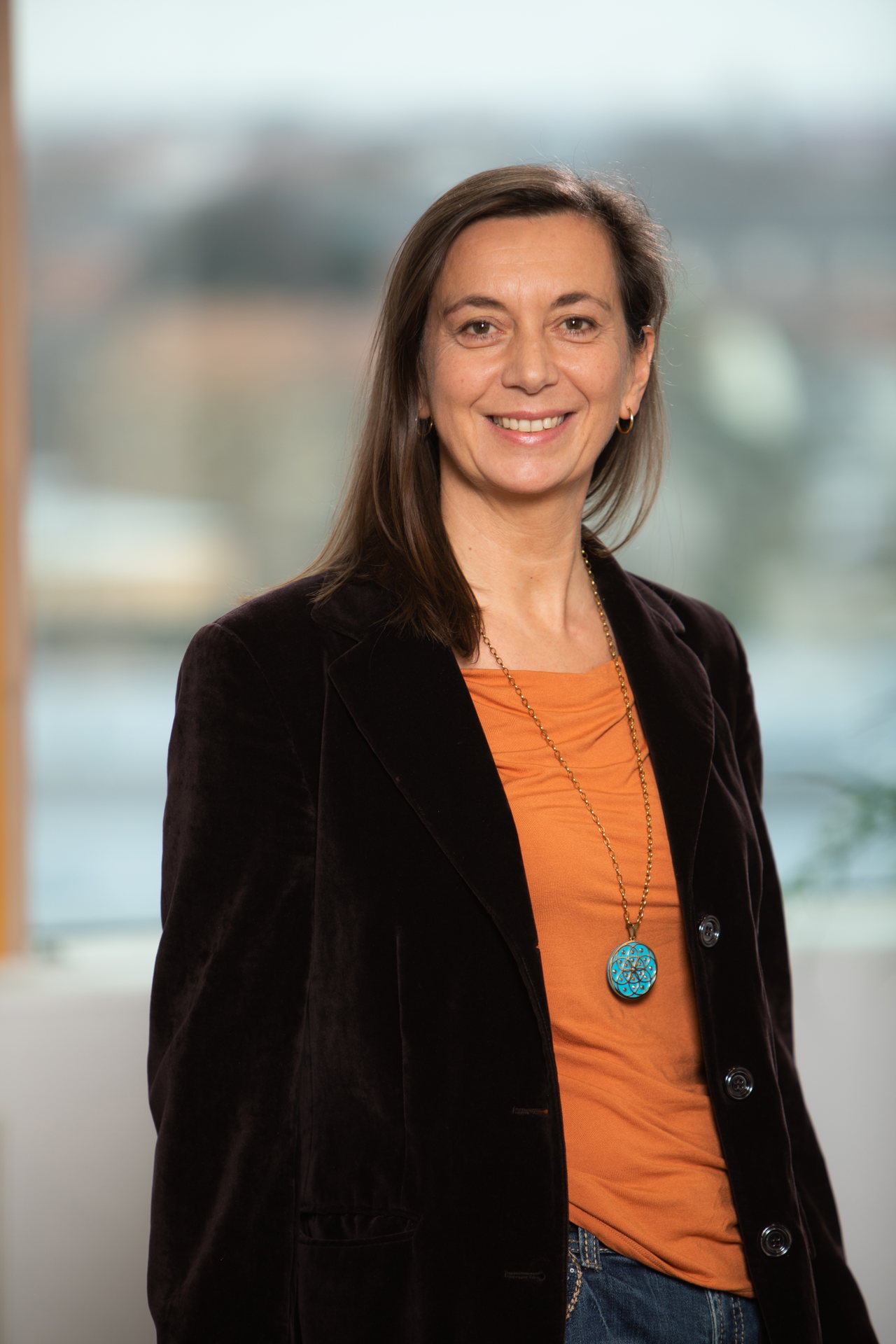
Petra Schwegler works in communications and marketing for Medientage München. Previously, the qualified journalist was in charge of the news editorial team at the trade journal W&V. Photo: Media.Bavaria GmbH, Alexander von Spreti
The Media Network Bavaria, is an initiative promoting Bavaria as a media hub. Through its events and projects, it brings together the Bavarian media sector to address the trends and challenges of digital transformation. It fosters networking both within individual media segments (such as audio, film or the press) and across sectoral boundaries (for example, with the automotive industry, medicine or science). MedienNetzwerk Bayern is part of the Media.Bavaria GmbH.