From Reach to Relationships
What INMA Berlin 2026 revealed about the future of news | Twipe Insights, by Emma Lein
Published: 19.5.2026 | Foto / Video: INMA, Youtube
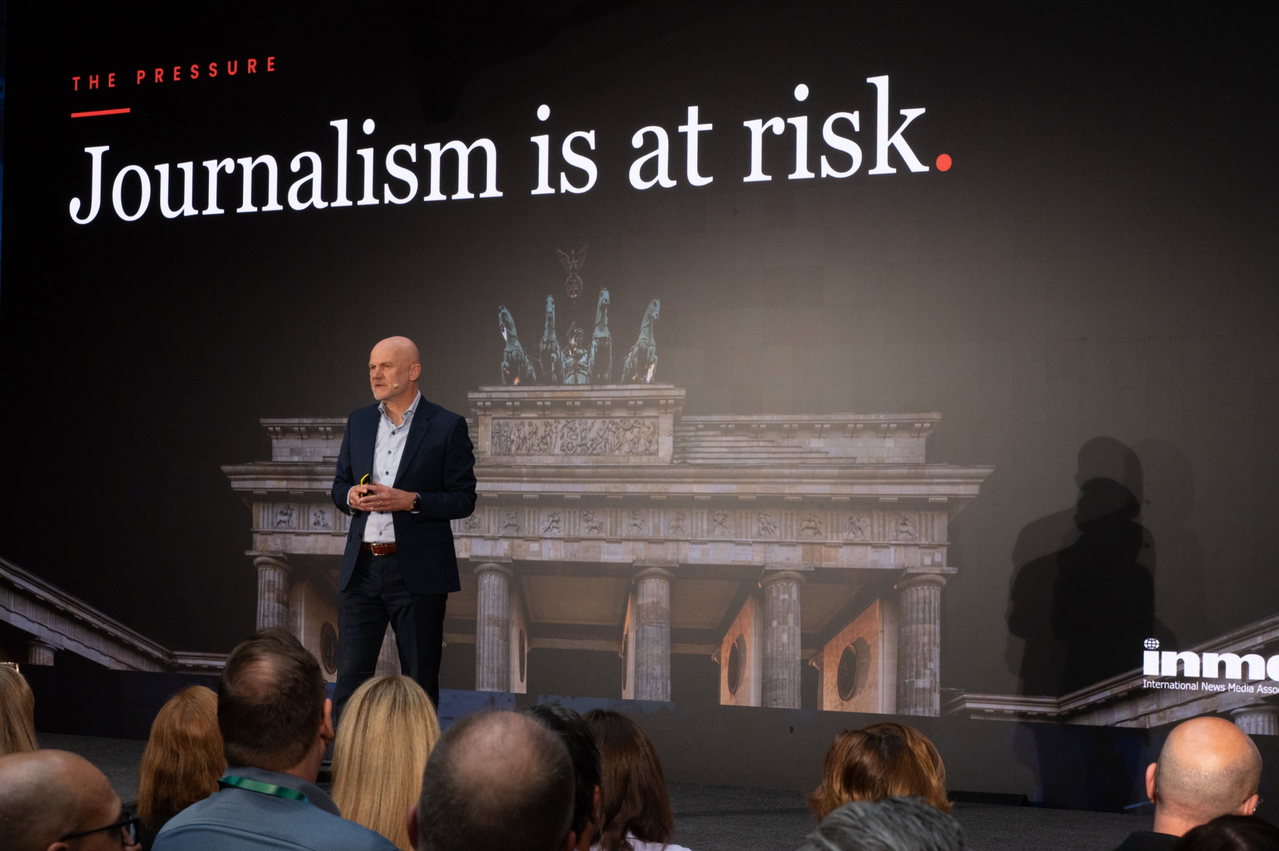
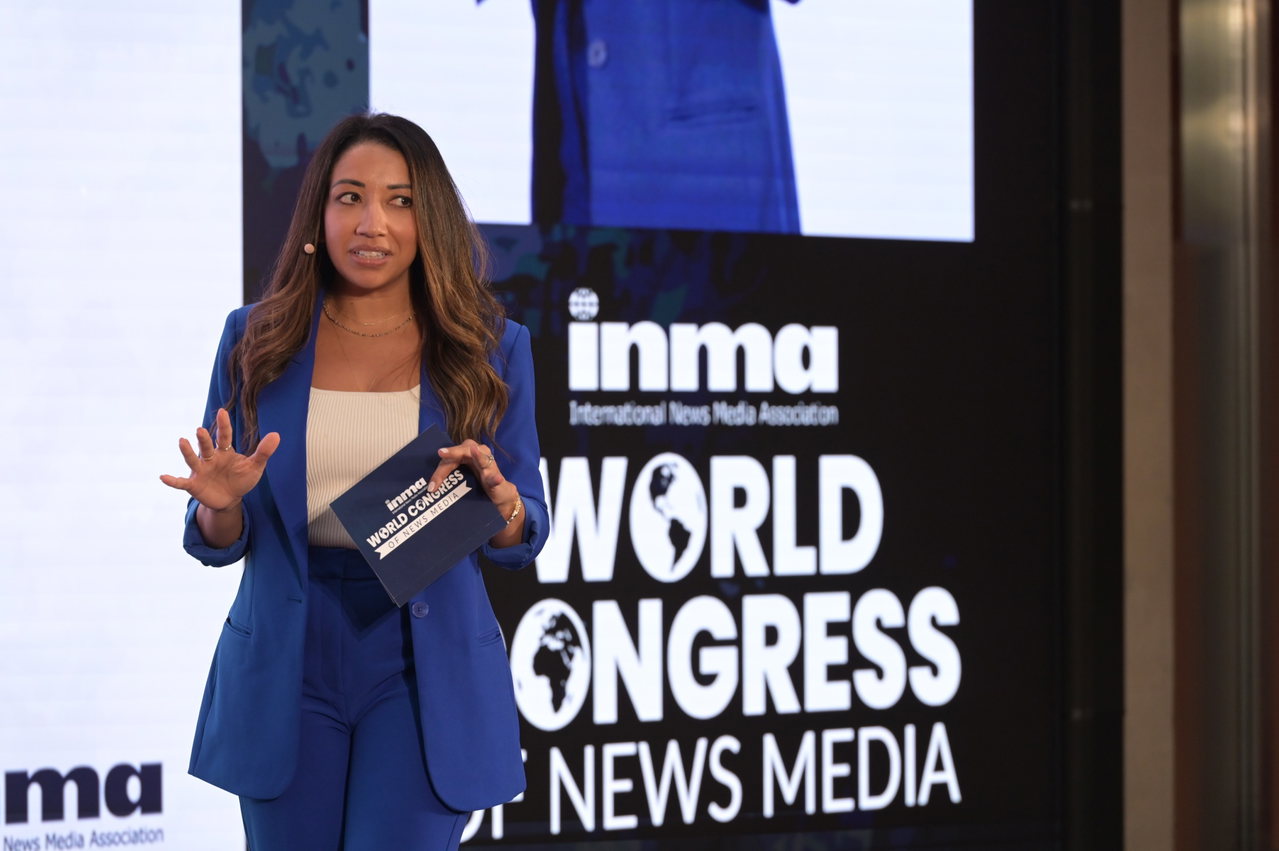
Last week in Berlin, news media executives, editors and media strategists gathered at the INMA World Congress of News Media to discuss the future of journalism, trust, AI, subscription, advertising and audience relationships.
Across the sessions, one message came through clearly: the old playbook of chasing reach, traffic, and platform distribution is weakening. Publishers now face a more strategic challenge: how to become trusted, how to protect their content and brand and how to be valuable enough to be chosen by readers every day.
Here are our 5 strategic lessons from the INMA World congress to navigate the next phase of the digital transformation:
1. Move from reach to relationships
A recurring theme throughout the Congress was that attention can no longer be taken for granted. As Gert Ysebaert, CEO of Mediahuis, put it during the opening session, publishers need to move beyond traditional reach strategies and focus on deeper audience relationships.
For years, digital publishing strategies were built around scale: more traffic, more pageviews, more platforms, more distribution. But that model is under pressure. Search traffic is declining, zero-click environments are growing, and audiences are increasingly fragmented across platforms and formats.
The strategic takeaway is clear: publishers should not only ask, “How do we reach more people?” They need to ask, “Why should people come back to us?”
This changes the role of product. News products are no longer just distribution channels for journalism. They are relationship engines. They need to help readers build habits, feel connected, and integrate journalism into their daily lives. In this new environment, loyalty matters more than casual reach.
2. Your brand is your strongest moat
Earl J. Wilkinson, CEO of INMA, delivered one of the clearest strategic messages of the Congress: in a world where traditional moats have collapsed, brand may be the last real advantage news publishers have.
Distribution is no longer guaranteed. Advertising relationships have weakened. Editorial scarcity has been challenged by the abundance of digital and AI-generated content. As Wilkinson argued, the future belongs to publishers that are “unmistakably themselves.”
This means brand can no longer be seen as marketing or packaging. It becomes the operating system of the news company. It influences which stories you cover, what your product feels like, who you hire, how you price, how you build community, and even what you license to AI companies.
In an AI-generated content environment, a distinctive identity becomes even more valuable. AI can produce text, summaries, and synthetic content at scale. But it cannot easily replicate a trusted editorial identity, a clear mission, or a deep relationship with a community.
The lesson for publishers: define what you stand for, make it visible across the full reader experience, and build around it consistently.




3. Build a functioning market for your valuable content
A clear AI takeaway from INMA was that journalism is becoming more than content for readers. Trusted information is the fuel for the AI economy, and that economy cannot continue to exist without journalism.
AI companies need reliable, structured, rights-cleared content to build better products. Publishers already produce this through reporting, analysis, archives, and metadata. This means the industry has many cards to play — but only if it protects, structures, and monetises its content properly. Jonathan Roberts from People Inc, made a clear call to all publishers in the room to block AI scrapers and protect their valuable content.
If journalistic content is scraped without permission or payment, the news value chain breaks. A functioning information market would ensure publishers are rewarded for the quality of their journalism, while AI systems gain access to more trustworthy inputs.
For publishers, this means preparing content for licensing: better metadata, clearer rights management, stronger archives, and structured access. Done well, this can create a new revenue opportunity — and contribute to better, more reliable AI.
4. Towards “Liquid content”: Use AI to make journalism travel, but keep humans in control
Another key message from INMA was that AI can help journalism become more flexible, personalised, and accessible across formats. Yle’s session on “liquid content” captured this well: journalism should no longer be seen only as a fixed article, but as information that can travel across channels, formats, and audience needs.
A single story might become a long read, a short summary, an audio briefing, an explainer, a newsletter item, a push notification, or a personalised feed element. AI can support this by helping newsrooms summarise, translate, repackage, personalise, and optimise content for different contexts.
But liquid content is not the same as endless content production. The goal is not to create 10,000 versions of every story. The goal is to deliver the right information, in the right format, at the right moment, while preserving editorial intent.
That makes human judgement more important, not less. Editors must decide what matters, which formats are appropriate, where personalisation adds value, and where it risks creating noise or bias.
AI can help journalism travel further, but it cannot decide why a story matters. In a world of abundant synthetic content, verified human journalism becomes more valuable — and a human in the loop remains essential.
5. Protect your Super Users
Several sessions on subscriptions, advertising, young audiences, and local journalism pointed to the same conclusion: the most valuable audiences are not always the largest ones, but the most engaged ones.
Greg Piechota showed how disproportionate this value can be: the 1% of users who pay can generate at least 26% of all pageviews, while subscribers can account for up to 72% of total revenue. The advertising discussion reinforced the same point: in top-performing news organisations, subscribers may represent only 2% of users but generate 41% of pageviews.
This challenges the logic of maximising anonymous traffic. Inventory alone is not a strategy. Loyal users are more valuable across subscriptions, advertising, events, branded content, and advocacy.
The takeaway: focus less on serving everyone lightly, and more on serving your super users deeply. ePaper and digital edition readers are intrinsically such super users and they remain a core focus also for our solutions at Twipe.
First published in Twipe's blog.