“The era of easy reach is over”
Nic Newman about his main takeaway for publishers 2026 | Twipe Insights with Inês Lemos Morais Sarmento

Published: 20.8.2026 | Foto / Video: Twipe, Youtube
For over a decade, Nic Newman has studied how audiences engage and consume news digitally through the annual Reuters Institute’s Digital News Report (DNR), a large-scale global study.
If you ask him what his main takeaway for publishers is this year, you’d probably get an immediate answer: focus more on relationships and loyalty rather than reach.
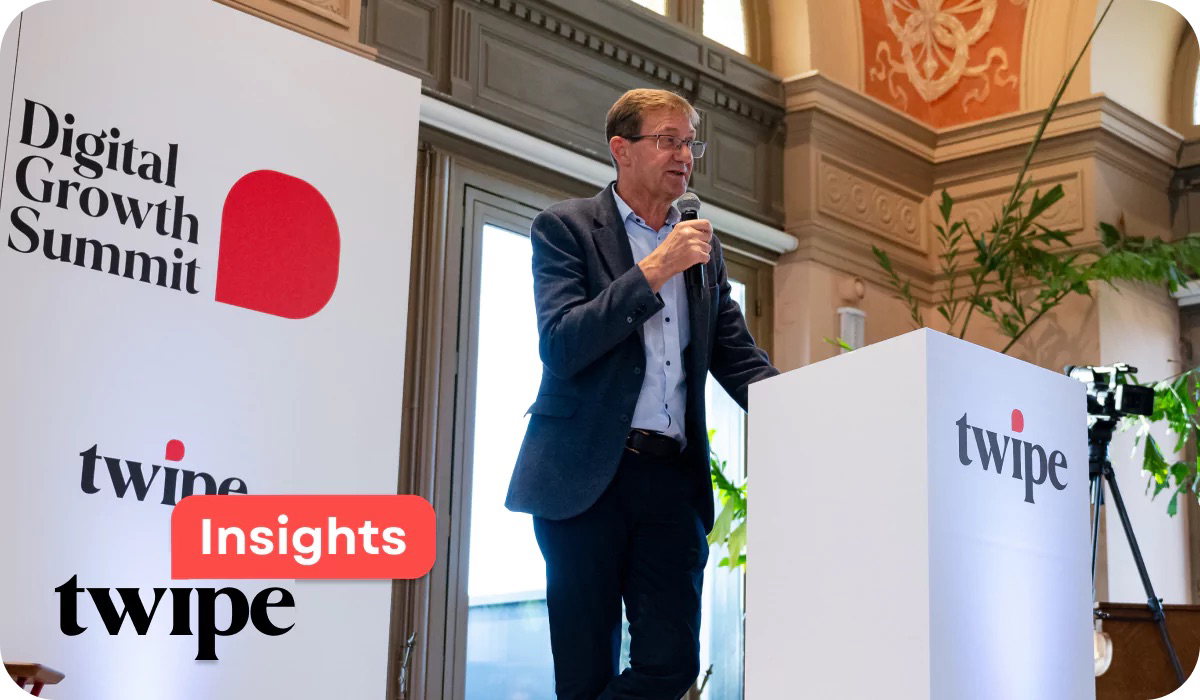
Joining us for his 6th time on stage at the Twipe Digital Growth Summit 2026, we sat down with Nic to unpack some of his key takes from the DNR, including:
Why reach is getting harder
Why text is not the be-all-end-all of news formats
What impact AI is having on the industry
Reach is getting harder because information feels less valuable
News audiences are becoming increasingly selective and avoidant. Is this a rational response to information overload or is the media industry is not matching how people want to consume news?
“It’s probably a bit of both,” according to Nic. It’s driven by an “overall environment where news has become super abundant, and therefore people value it less.” AI is only accelerating that over-abundance, making information faster and easier to access.
That said, while “AI is really good at providing facts and answers to questions”, he describes, “there’s so much more to publishing than doing that. It’s also about that emotional connection.”
That’s why Nic believes the best way for news organizations to stay relevant over the next decades is to focus on relationships and loyalty. “Publishers need to be very clear about which audiences they’re serving and to serve them deeply and with huge relevance.”
Here, publishers can take a page from the content creator’s playbook in successful relationship-building. They “have shown how they can relate to people in different ways,” Nic says, “and that is an opportunity for publishers to do the same”.
“Text websites alone aren’t going to sufficiently engage people digitally”
Fewer people spend time scrolling through publishers’ owned media, such as websites or apps. Nic recognizes that “text websites alone aren’t going to sufficiently engage people digitally”.
Once again, publishers can draw from content creators’ success. “Many of those creators also come from that newer social media generation and are fluent in storytelling techniques like short-form video, explanatory content, and other digital formats”.
Plus, “video and audio are growing in importance”, because it “helps build relationships and give people more time with your content”. Whether it is podcasts, videos, or any other personality-led formats, these do more than simply distribute information: they build emotional connection and loyalty because people can spend more time with them.
AI as a gateway, not a replacement
Nic doesn’t see AI replacing publishers’ own channels. “I think it’s gonna be complementary,” he says. There will still be a role for self-standing news websites and apps, but “AI is gonna become increasingly important as a gateway to that information.”
That opens commercial ground as well as editorial. He expects “media companies will be licensing more content to AI systems, and that will be an increasingly important part of their business,” alongside opportunities to build branded spaces, “perhaps even apps within the AI ecosystems,” some paid, some advertising-driven. Though as he cautions, “we’re really still at the very early stages of how this might develop.”
So what’s next?
How does AI compare to previous disruptions? It is “just a continuation of the disruption that we’ve had, or maybe an acceleration,” likely to increase the fragmentation of media and “the power of the platforms as opposed to individual publishers.” What is different this time is how far in it reaches in changing news creation.
Which brings us back to where Nic started. Both in online and offline environments, publishers need to be “building relationships for the long term.” And the key for publishers to stand out is to offer more than just information to the public, but also something they can remember and connect with at any given time.
First published in Twipe's blog